MONTE CARLO to MONACO: Designing the CONTEMPORARY RIVIERA Apartment
How architecture, landscape and coastal culture continue to shape Monaco's most considered interiors.
There are few places where architecture is shaped so directly by geography as Monaco. Set between the Mediterranean Sea and the steep cliffs of the French Riviera, the principality has spent more than a century redefining what is possible within an extraordinarily limited footprint. Here, every square metre carries value, every view is carefully framed and every building contributes to an evolving architectural landscape that balances heritage with innovation.
Today, Monaco is recognised not only for its celebrated waterfront and international profile, but also for its remarkable collection of residential architecture. Elegant Belle Époque landmarks sit alongside sculptural contemporary towers, while interiors increasingly reflect a lifestyle that is fluid, international and deeply connected to the sea.

For interior designers, Monaco presents a fascinating challenge. Designing here extends beyond creating beautiful spaces. It requires an understanding of architecture, climate, light and the distinctive rhythm of Riviera living. The most successful homes feel intrinsically connected to their surroundings, allowing the architecture, the coastline and the lifestyle to inform every design decision.
Unlike many residential destinations, Monaco is rarely defined by a single architectural style. Within a short walk, Belle Époque façades give way to sleek glass towers, while historic villas overlook some of Europe's most ambitious contemporary developments. This layered urban fabric demands an equally nuanced approach to interior design, one that responds not only to the building itself but also to the wider character of the principality.
As Elicyon continues to expand its international portfolio, Monaco represents a natural extension of the studio's work: creating considered interiors that are rooted in place while responding to the individual lives of those who inhabit them.
As Elicyon continues to expand its international portfolio, Monaco represents a natural extension of the studio's work: creating considered interiors that are rooted in place while responding to the individual lives of those who inhabit them. In a destination where many clients divide their time between residences and private yachts, the same thoughtful approach to design translates naturally across both.

An Architectural Story Defined by Constraint
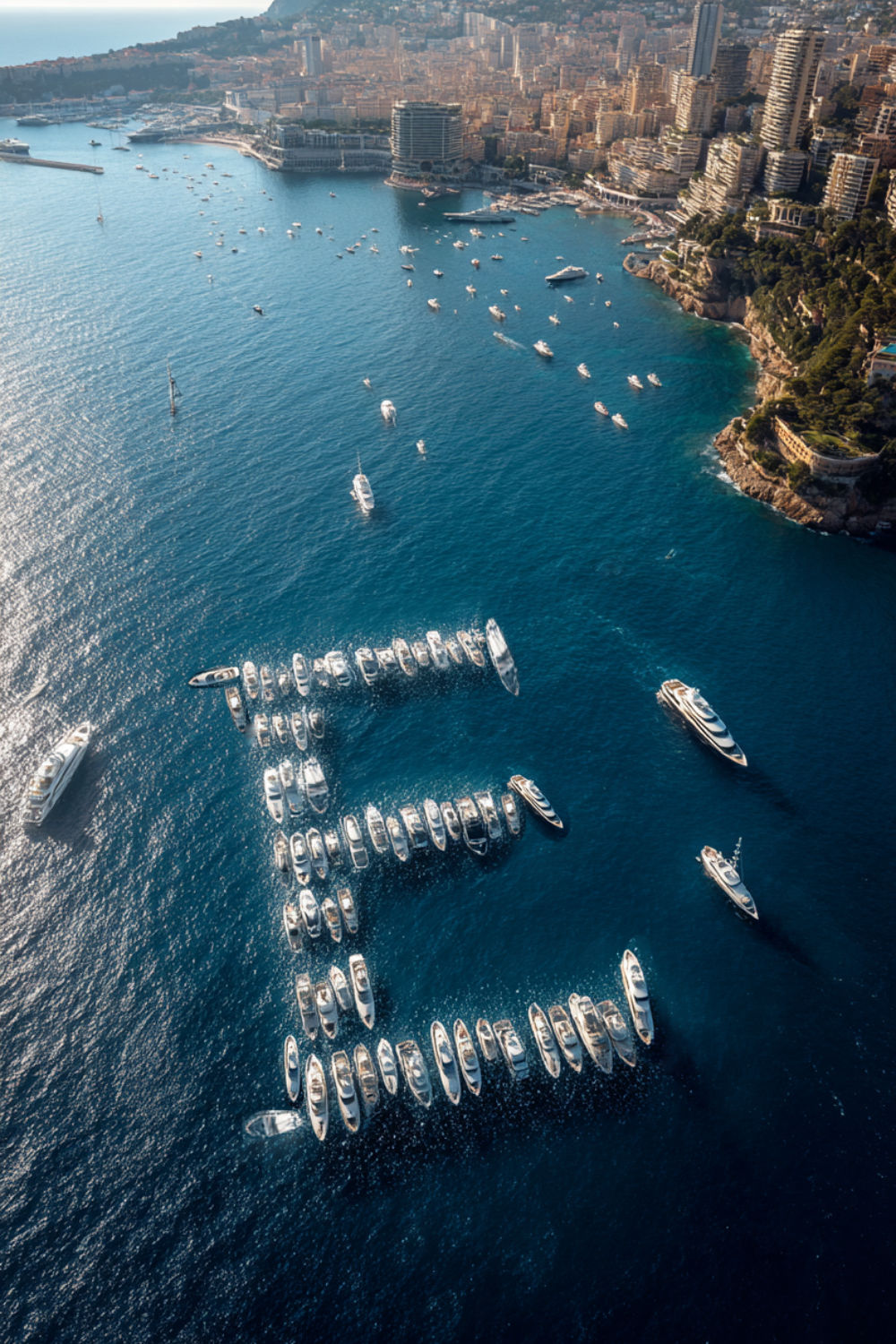
Unlike many global cities, Monaco has never had the luxury of outward expansion. Covering just over two square kilometres, it is one of the world's smallest countries, with decades of land reclamation continually reshaping its coastline. Rather than limiting architectural ambition, these constraints have encouraged remarkable innovation.
Monte Carlo's architectural identity was established during the Belle Époque, when the principality transformed into one of Europe's most celebrated resort destinations. Landmark buildings such as the Casino de Monte-Carlo, designed by Charles Garnier, introduced the ornate façades, sculptural detailing and grand proportions that still define much of the district today. Nearby, the Hôtel de Paris Monte-Carlo and the domed Opéra de Monte-Carlo reinforced this architectural language, combining classical symmetry with decorative stonework, sweeping interiors and generous public terraces overlooking the Mediterranean.
These buildings were conceived not simply as destinations but as experiences. Natural light, carefully framed views and a strong relationship between architecture and landscape were integral to their design long before they became hallmarks of contemporary residential architecture.

During the second half of the twentieth century, Monaco entered another period of transformation. As international demand for property increased and developable land became ever scarcer, residential architecture evolved vertically. Apartment buildings grew taller and footprints became more efficient, reflecting the realities of building within one of the world's most densely populated countries. Rather than replacing Monaco's historic character, this new architecture introduced another layer to the city's identity, one defined by engineering, innovation and uninterrupted vistas across the Mediterranean.
Today, historic landmarks exist alongside a new generation of residential buildings. Developments such as Tour Odéon, Bay House and Mareterra demonstrate how Monaco continues to rethink density, creating vertical neighbourhoods where expansive glazing, generous terraces and sophisticated engineering maximise both space and sea views.
The dialogue between heritage and innovation has become one of Monaco's defining architectural characteristics.
The Importance of Light, Views and Riviera Living
One of the defining characteristics of Monaco interiors is their relationship with natural light. The Riviera's climate offers exceptional daylight for over 300 days a year, transforming the way homes are experienced. Large expanses of glazing, generous terraces and open-plan layouts allow interiors to change throughout the day as sunlight shifts across materials and surfaces, and azure skies turn into what's known as 'blue hour' come evening, creating a beautiful navy glow inside and out.
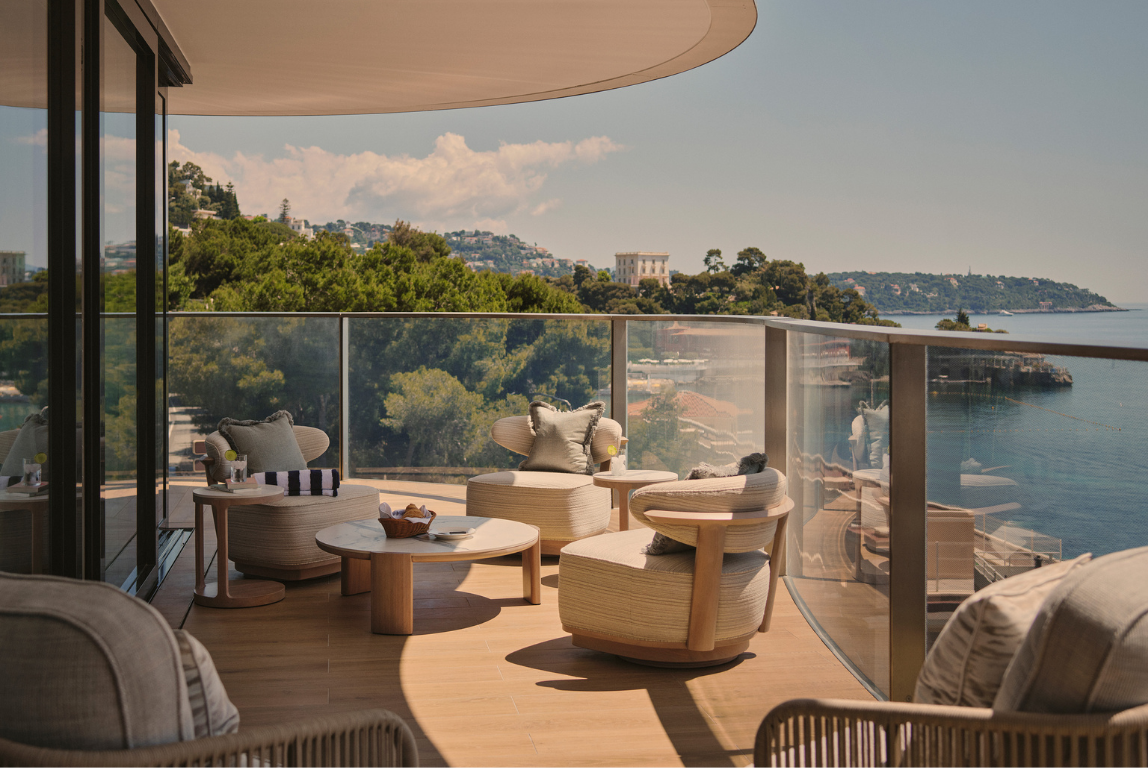
Rather than treating the view as a backdrop, contemporary Monaco apartments often make them the organising principle of the entire design. Living spaces orient towards the sea, bedrooms frame sunrise across the coastline and outdoor terraces are rarely treated as seasonal additions but instead become integral living environments, used for morning coffee, long lunches and evening entertaining overlooking the Mediterranean. As a result, interior layouts often extend naturally onto terraces, creating a continuity of materials, furnishings and atmosphere that blurs the boundary between inside and out.

Material choices often reinforce this connection. Natural stone, pale timber, textured plaster and tactile fabrics respond beautifully to changing light, creating interiors that feel calm without becoming overly minimal.
Yacht Design's Lasting Influence on Monaco Interiors
Few places demonstrate the relationship between residential design and yacht design as clearly as Monaco. With one of the world's most recognised marinas at its heart, the principality has long been influenced by the craftsmanship and spatial ingenuity associated with luxury yacht interior design.
Designing for a yacht requires extraordinary precision. Every surface performs multiple functions, storage is integrated seamlessly and materials must balance durability with elegance, while circulation flows naturally through compact spaces. Many of these principles now appear within contemporary Monaco apartments.
The level of craftsmanship expected within yacht design has also shaped residential expectations across Monaco. Precision-engineered joinery, finely detailed metalwork and custom upholstery are valued not simply for their appearance but for the sense of permanence and refinement they bring to everyday living. Much like a yacht, every element is expected to perform beautifully while feeling effortlessly integrated into the wider design.

Rather than filling homes with unnecessary ornamentation, interiors increasingly prioritise efficiency, craftsmanship and carefully integrated detailing. Joinery conceals storage without disrupting architectural lines, while curved forms soften transitions between rooms and carefully selected finishes reflect natural light while introducing warmth and texture. The influence is subtle rather than literal; homes need not resemble yachts to benefit from the discipline and ingenuity that yacht interior design encourages.
This approach feels particularly relevant within Monaco, where maximising space while maintaining a sense of openness remains central to successful residential design.
Elicyon's Monaco Retreat
Elicyon's Monaco Retreat illustrates how this philosophy can be interpreted within the principality. Positioned high above the Mediterranean, the apartment draws upon Monaco's exceptional coastal outlook while carefully responding to the architectural rhythm of the building itself. Rather than competing with the landscape, the design allows it to remain the focal point throughout the home.

Throughout the apartment, materials were selected to reinforce the calm, coastal character of the home. Softly textured finishes create subtle variation as daylight moves through the rooms, while a restrained palette allows the changing colours of the Mediterranean to remain the home's most expressive feature. Carefully integrated joinery maintains clean architectural lines without sacrificing practicality, reinforcing the sense of calm that defines the project.
The project demonstrates how contemporary Monaco interior design can embrace modern living while remaining deeply connected to its location. Rather than referencing Riviera style through decoration alone, the apartment reflects the qualities that define the region: abundant natural light, fluid spatial planning, enduring craftsmanship and an effortless relationship with the outdoors.

Looking Towards the Future of Riviera Living
Monaco has never allowed physical limitations to define its architectural ambitions. Instead, it has continually demonstrated how thoughtful design can transform constraint into opportunity. From the elegance of Belle Époque Monte Carlo to the engineering of its newest waterfront developments, the principality continues to shape a distinctive vision of contemporary Riviera living.
The architectural principles that define Monaco continue to resonate far beyond the Mediterranean. Making the most of natural light, designing around exceptional views, creating seamless connections between indoors and outdoors and placing human experience at the centre of every design decision are ideas that remain relevant wherever exceptional homes are created.

For Elicyon, designing within this context is not simply about creating beautiful interiors, but about understanding how architecture, landscape and everyday life come together to create homes with a genuine sense of place.
Whether overlooking the coastline of Monaco or situated elsewhere across the globe, the strongest homes always begin with the same intention: to create places that feel connected to where they are and to those who live within them.
Share Article
EXPLOREMORE
Go beyond the finished spaces. Explore the insights, inspirations, collaborations, and ideas that shape our world.