ART DECO Interior Design: KEY FEATURES and DESIGN PRINCIPLES
Explore Art Deco interior design principles and how design studio Elicyon applies them across penthouses, boutique hotels and residential interior design worldwide.
In 1925, Paris staged one of the most consequential design exhibitions the world had seen. The Exposition Internationale des Arts Décoratifs et Industriels Modernes drew nations from across the globe to a 55-acre site spanning both banks of the Seine, presenting 15,000 exhibits and a bold new visual language that would go on to define an era. Over a century later, that language remains one of the most referenced and reinterpreted in design. Museums marked the centenary. Studios are revisiting its principles. And in some of the most considered interiors being made today, its influence is quietly, deliberately present.
At Elicyon, Art Deco is understood as a framework: a set of principles around geometry, material contrast and spatial order that translate with equal relevance across a Hyde Park apartment, a Westminster penthouse or a boutique hotel commission. Nowhere is this more apparent than at Elicyon's 60 Curzon Apartment, a show apartment within a Mayfair development that honours the building's stylised glamour and linear geometric facade, rooted in the Art Deco era.

This piece explores what those principles are, where they came from and how they continue to shape residential interior design and interior architecture across some of London's most significant addresses.
The Origins of Art Deco
Art Deco did not emerge fully formed. It developed gradually through the early decades of the twentieth century, drawing from a convergence of influences: the bold geometry of Cubism, the decorative ambition of Art Nouveau and the optimism of a world rebuilt after the First World War. Spanning roughly the period between the two World Wars, it was defined by streamlined forms, geometric ornamentation and an appetite for materials that felt genuinely new.
The 1925 Paris exposition gave the movement its public moment. Organised to assert French mastery of the decorative arts, it drew over 15 million visitors and presented a vision of modernity that was ornate without being historicist, structured without being cold. The name Art Deco itself did not enter common usage until the 1960s, when historians retrospectively attached it to the movement. At the time, it was simply the spirit of the age.
What made Art Deco so enduring was its elasticity. It absorbed influences from Egyptian temple design, tribal African art and Mesoamerican architecture. It appeared equally at home in the soaring verticality of the Chrysler Building and the sun-bleached facades of Miami Beach. It travelled across continents, adapting to local cultures while retaining a recognisable core: symmetry, geometric motif, material richness and a confidence in ornament as a form of architectural intention.
In London, that legacy is visible across the city. From the Hoover Building in Ealing to Battersea Power Station, from the Savoy to the Dorchester, the movement left a distinctive imprint on the capital's built environment. Today, as the recent centenary prompts a renewed conversation about what Art Deco means and what it still has to offer, its principles are finding their way into a new generation of interior design in London, not as pastiche, but as foundation.

Art Deco Interior Design: A Foundation in Geometry and Order
At the core of Art Deco interior design is a strong architectural framework. Clean lines, symmetry and repeating geometric motifs – chevrons, sunbursts, stepped forms – create a sense of rhythm that guides how a space is read and navigated. These are not purely decorative gestures. They are organisational tools, shaping the experience of a room before a single piece of furniture is placed.
This principle is most legible in projects where the architecture itself carries an Art Deco lineage. Originally conceived as a show home interior design commission, at Elicyon's Westminster Penthouse Apartment, the building's own Art Deco exterior provided the direct creative reference. The geometric language of the existing window structure was treated not as backdrop but as focal point, with floor-to-ceiling windows framing views across the Palace of Westminster, Big Ben and the London Eye with a precision that feels entirely intentional. Angular silhouettes, graphic patterned rugs and carefully considered artwork reinforce that geometry throughout the interior, creating a space that feels structured and resolved at every level.

The 60 Curzon Apartment extends this thinking into a residential context. Here, soft curves and rounded silhouettes are introduced alongside custom Art Deco interior design elements and bespoke cabinetry, creating a rhythm between the geometric rigour of the architecture and the warmth of a home designed for daily life. Statement pieces, among them a 1936 maple wood grand piano and a 300kg 19th century marble urn, anchor the apartment in history and craftsmanship, ensuring that geometry never tips into austerity.

Material Contrast and Craft in Art Deco Interiors
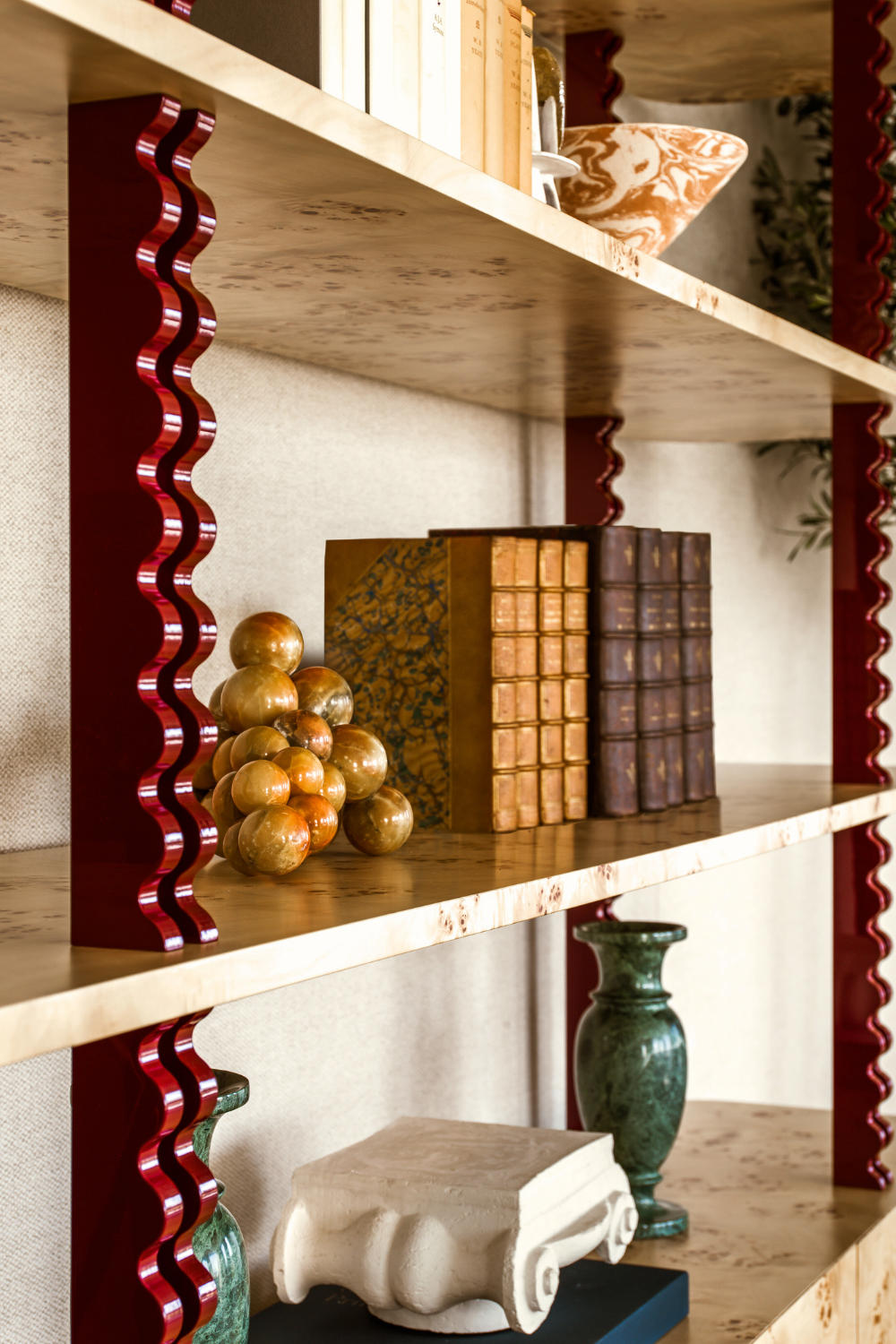
If geometry provides the structure of Art Deco interior design, materiality provides its depth. The movement's richness lies in the considered pairing of surfaces: lacquered woods alongside natural stone, brass and bronze set against softer textiles, polished finishes layered with tactile texture. At its best, this is not decoration for its own sake but a material intelligence that makes a space feel genuinely singular.
At The OWO Residences by Raffles, this approach is expressed through the particular demands of a Grade II listed building. The Old War Office, dating to 1906, required a response that was precise without being precious. Elicyon's show apartment honours the nuanced history of the building through a curated mix of contemporary ceramics, classical artworks and carefully sourced antiques, including a hand-turned drinks cabinet and dining table by Alfred Newall and a Whitway chandelier adapted from a 1940s design. High ceilings adorned with intricate mouldings are complemented by a palette of soft green tones and natural elements, creating a sense of quiet grandeur that feels rooted in the building's own material character.

At Elicyon’s One Hyde Park Residence, a similar precision governs the approach. Bespoke furniture plays a central role across both projects, each piece designed as part of the wider composition rather than selected in isolation. This is a principle that runs across Elicyon's residential interior design work: that materiality and craftsmanship are fundamental to how a space is conceived from the outset.

Colour and Atmosphere in Art Deco Interior Design
Colour in Art Deco interior design is deliberate and controlled. Neutral foundations are paired with deeper, richer tones to create depth, allowing the architecture to remain the focal point while the palette contributes to the overall atmosphere of the space. In contemporary practice, this rarely means recreating the jewel-toned opulence of the 1920s directly. It means understanding the underlying logic: that colour should be purposeful, layered and responsive to both the architecture and the people who inhabit the space.
At Elicyon's Knightsbridge Apartment, colour emerges from the client's own creative passions. The chromatic harmony of the space was drawn from the tension within British artist Peter Kinley's work, with vivid fabric and material accents woven across the home against a backdrop of bleached original timber finishes. The result is a palette that feels curated rather than composed, one that has its own internal logic and rewards careful attention.

At the Kensington Penthouse, the approach is warmer and more collected. A rich palette of warm greens, ochres and soft neutrals is layered with antiques, contemporary pieces and artisanal finishes, with bespoke joinery and curated displays creating moments of interest throughout. An antique Art Deco hallway commode, an eight-drawer burl wood piece of sculptural presence, sets the tone on arrival, introducing a sense of heritage that carries through the entire residence.

In both projects, lighting plays an integral role in how colour is experienced. Integrated lighting articulates volumes, shifts the quality of a palette across different times of day and defines transitions between spaces, functioning as an architectural element rather than a practical afterthought.

Context and Place Within Art Deco Typologies
While Art Deco is often associated with urban environments, its principles extend naturally across very different settings and typologies. The strength of the framework lies precisely in this adaptability: the same underlying logic of geometry, material richness and spatial order can be interpreted through entirely different contexts, producing outcomes that feel specific to their place rather than generic in their application.
At the 60 Curzon Apartment, that context is Mayfair. The building's Art Deco heritage informed every decision, from the thoughtful curation of vintage and contemporary details to the meticulous layering of unique antique pieces that give the interior a gallery-like atmosphere. The apartment radiates warmth while maintaining the clarity and proportion that Art Deco demands. An expansive terrace styled with oversized antique planters and verdant greenery extends the interior logic outward, ensuring the design remains coherent from the heart of the apartment to its outermost edge.

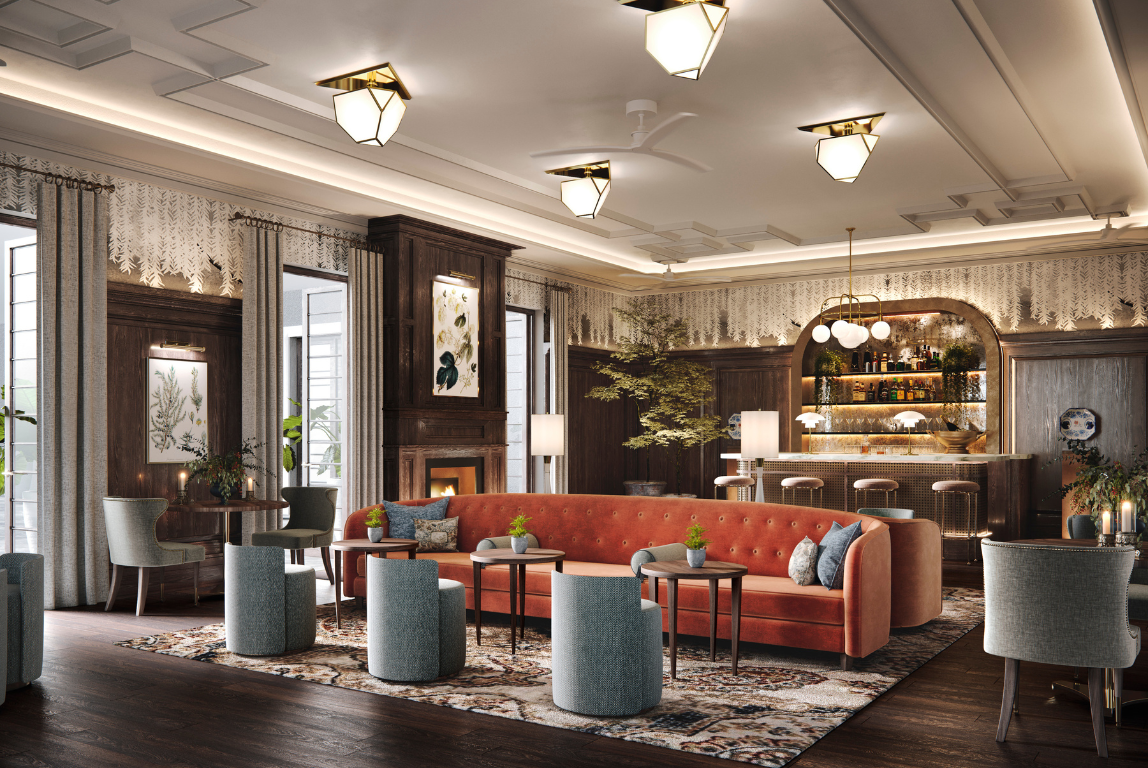
The Sri Lanka Boutique Hotel represents a different kind of interpretation entirely. Nestled within verdant tea plantations, the hotel draws on the layered character of an English country house while celebrating its tropical setting. Here, the discipline of Art Deco is present in the structure of the spaces and the considered approach to materiality, softened through texture, natural light and a seamless connection with the surrounding landscape. Neutral tones are layered with rich textures and subtle accents, while thoughtful lighting and handpicked artworks contribute to an atmosphere that feels both timeless and deeply rooted in its location.
In both projects, the same principles apply. The outcome is shaped entirely by context, but the underlying intention remains consistent: to create interiors that feel resolved, purposeful and genuinely responsive to the people and places they are made for.
Designing Around the Individual: The Elicyon Approach
Art Deco endures not because it is a recognisable aesthetic but because it is a transferable set of principles. Geometry, material intelligence, spatial order, a confidence in ornament as intention: these are tools that can be shaped around individual ways of living as readily as they can be applied to a landmark development or a listed building. This is where the movement's lasting relevance lies, and it is the lens through which Elicyon approaches every project.

Charu Gandhi's own home, Alton House, offers perhaps the most personal expression of this philosophy. The home was shaped not by new acquisitions but by what Charu describes as her long-loved objects: owned pieces, reclaimed finds, vintage discoveries and elements from past projects given new meaning through context and composition. A vintage Italian marble table from the 1950s, its travertine top defined by an open grain and a base of striking geometry, sits in the sunroom. A Holland Cassidy rug, woven using four distinct techniques, brings soft geometry and chamfered corners to the sitting room floor. Lucite sits alongside marble, brass alongside bouclé, lacquered timber alongside natural grain. The material language is layered and considered, shifting in tone throughout the day as light moves across surfaces chosen with genuine attention.

This same attentiveness defines Elicyon's approach across every commission, whether a penthouse interior design scheme above Westminster, a boutique hotel interior design project in Sri Lanka or a residential interior design brief in Knightsbridge. Charu Gandhi's background as a RIBA-qualified architect, combined with a design philosophy centred on understanding how each client moves through, uses and feels within a space, produces interiors that are tailored to the individual rather than defined by a singular style. The principles of Art Deco provide a framework. The person who inhabits the space determines everything else.
Explore our projects or make an enquiry to begin a conversation with our design studio.
Share Article
EXPLOREMORE
Go beyond the finished spaces. Explore the insights, inspirations, collaborations, and ideas that shape our world.