INTERIOR ARCHITECTURE vs INTERIOR DESIGN: What’s the DIFFERENCE?
What's the difference between an interior architect and an interior designer? Explore both roles, where they overlap, and what to look for in an interior architecture and design studio.
INTERIOR ARCHITECTURE vs INTERIOR DESIGN: What’s the DIFFERENCE?
The terms interior architect and interior designer are often used interchangeably, yet the difference between the two is both meaningful and consequential to the outcome of a project.
As a studio that offers both disciplines it is important to clarify that they share the same spaces and a common ambition: to create environments that function intuitively and feel deeply considered. Interior architecture establishes the structural and technical logic of a space. Interior design shapes its atmosphere, material character, and meaning. Each brings a distinct vantage point, and each is critical at a different stage of a project.
Understanding where the two disciplines diverge and where they overlap matters whether you are commissioning a project for the first time or selecting an interior architecture firm with the depth to deliver across both.
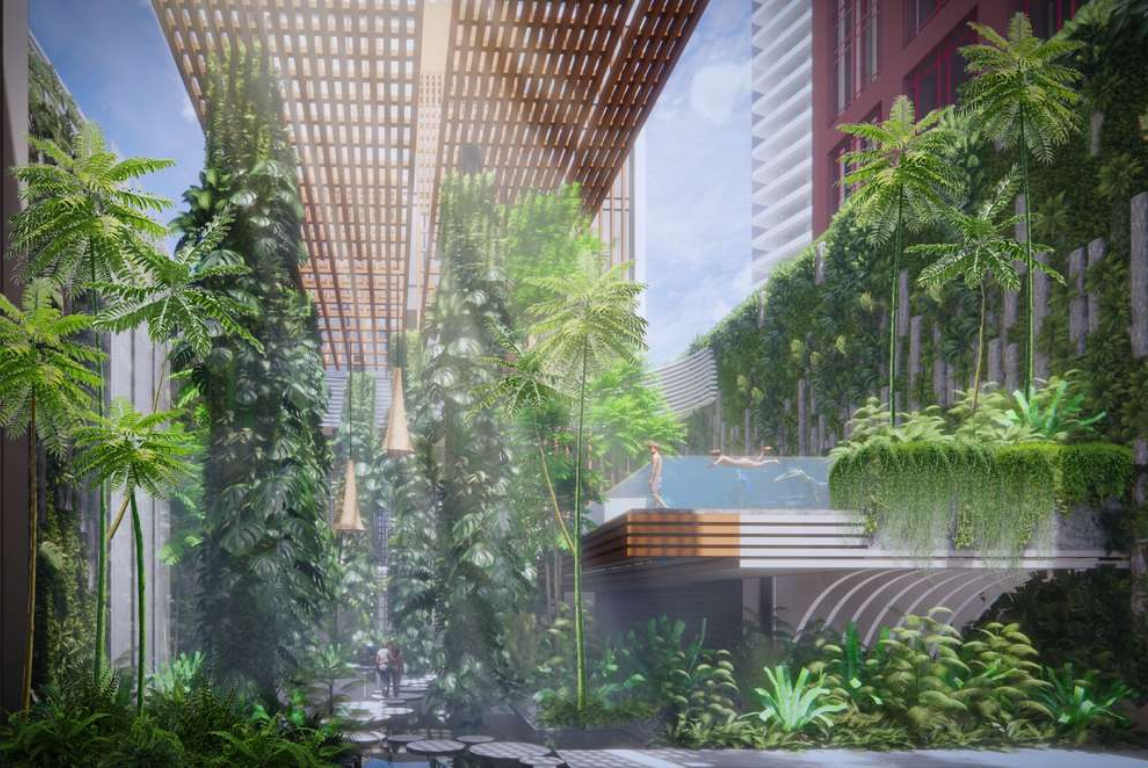
Singapore Botanical Hotel
UNDERSTANDING THE BUILT ENVIRONMENT AS A COLLABORATIVE EFFORT
Shaping projects from the foundation to the final touches, the boundaries between roles often shift from project and studio.
Interior projects often include a wider team of architects, engineers, contractors, and planning authorities, all working towards a shared voice. Within this larger framework, interior architects and interior designers work through risk management, compliance, building regulations, planning conditions, CDM responsibilities, and safety requirements.
It is within this layered production process that the roles of an interior architect and interior designer begin to diverge and overlap, each responding to unique aspects of the same spatial challenge ahead.

WHAT DOES AN INTERIOR ARCHITECT DO?
To understand the role of an interior architect, it is useful to begin with its position within the wider architectural or design practice. Different from architects who design the external form of core structures of buildings, in interior architecture, the focus is on structural and spatial organisation of building interiors and the performance of internal space.
Leaning into the function of internal environments, interior architects work most actively in the early design process, thinking both analytically and creatively to set the bones of a space.
From residential and heritage buildings to mixed-use developments, key responsibilities for interior architects include the following:
SPATIAL PLANNING AND LAYOUT RENDERS
CONSTRUCTION DRAWINGS FOR USE OF CONTRACTORS DURING BUILDING
SECTIONS AND ELEVATIONS TO COMMUNICATE VERTICAL SPATIAL RELATIONSHIPS
REFLECTING CEILING PLANS (RCPs) TO COORDINATE LIGHTING
ELECTRICAL MAPPING, DETERMINING PLACEMENT OF OUTLETS, LIGHTING CIRCUITS, AND CONTROLS, INCLUDING POWER AND CONTROL STRATEGIES
DESIGN AND INTEGRATION OF MECHANICAL, ELECTRICAL AND STRUCTURAL SYSTEMS
Beyond documentation, interior architects are also responsible for resolving constraints. These vary from project to project. In heritage buildings, this could look like working with pre-existing structures while introducing contemporary functionality. Differently, in new-build developments, it may look more like establishing spatial logic that anticipates future use.
Longevity becomes central to this process. Particularly in new builds, interior architects consider how space will evolve over time, supporting not only current needs but future ways of living. This envelopes a growing emphasis on sustainability and responsible design, ensuring that spaces remain adaptable, efficient, and relevant.

WHAT DOES AN INTERIOR DESIGNER DO?
While interior architecture defines the structure of space, interior design shapes the atmosphere.
An Interior design studio builds from the framework established by interior architects, thinking about both the craft and behavioural foundations that impact how people experience space, bringing in both creative and technical solutions.
Through the careful orchestration of materials, light, furniture, and proportion, interior design work moves beyond aesthetics and into a deeper understanding of the atmosphere and utility of space.

Typical responsibilities of an interior design studio include:
DEVELOPMENT OF VISUAL CONCEPTS AND 3D RENDERINGS
DESIGN OF BESPOKE FURNITURE, JOINERY, AND A RANGE OF OTHER DECORATIVE ELEMENTS
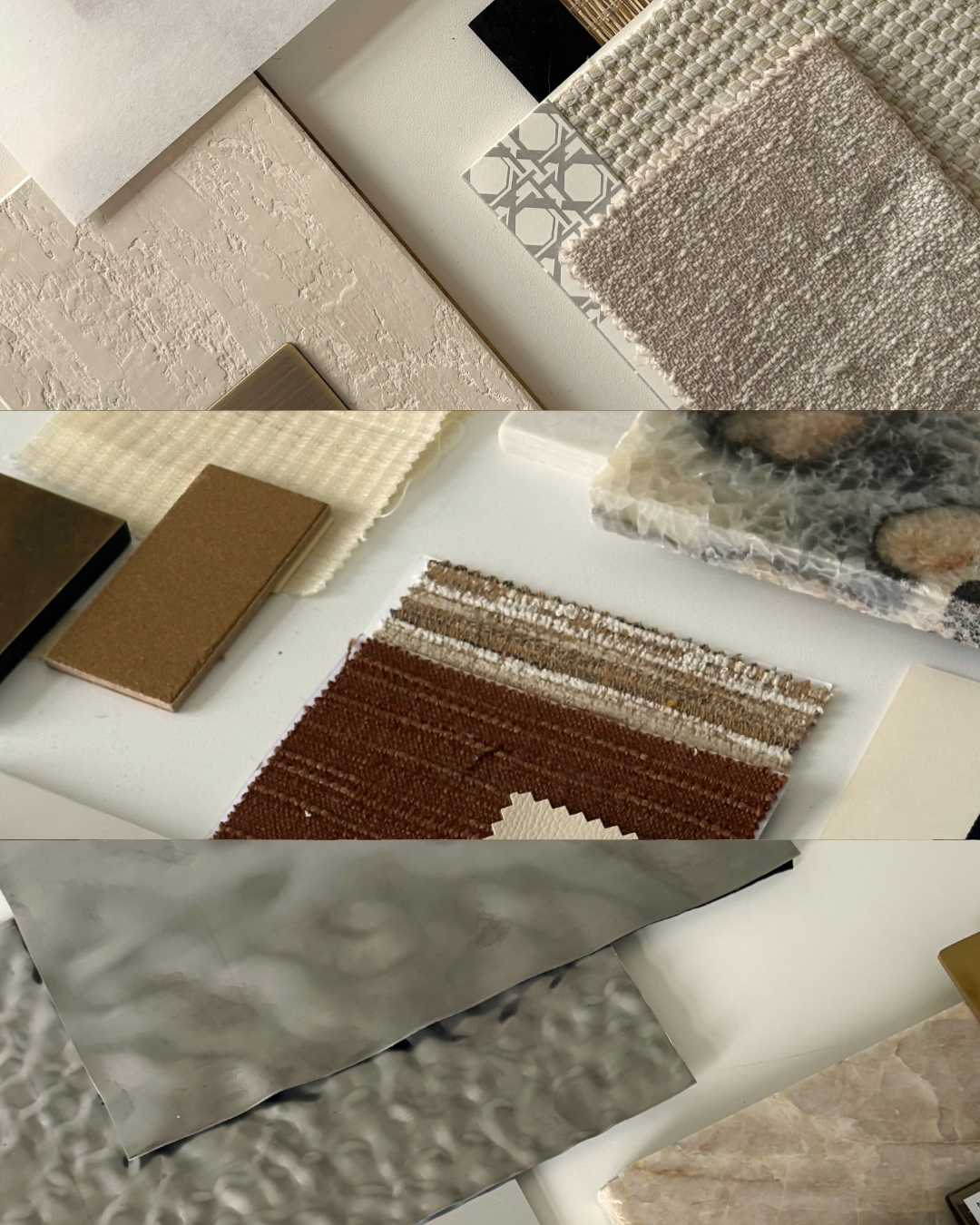
EXPERIMENTATION AND SELECTION OF MATERIALS, FINISHES, AND COLOUR PALETTES
FURNITURE LAYOUTS AND FF&E SPECIFICATIONS
LIGHTING CONCEPTS AND DECORATIVE FIXTURES
INSTALLATION AND STYLING

Although these outputs set up the practical duties of an interior design studio, the role also operates at a more personal level. Acting as both an interpreter and intermediary, interior designers translate client briefs into spatial expression, aligning individual preferences, routines, and aspirations within the wider design vision.

THE KEY DIFFERENCES BETWEEN INTERIOR ARCHITECTS AND INTERIOR DESIGNERS
Although collaboration is often essential, each role has their distinct contributions across the two disciplines.
STRUCTURAL VS. EXPERIENTIAL: Interior architects focus on spatial organisation, structural interventions, building systems, and construction documentation while interior designers delve into the material finishes, furniture, lighting, and atmosphere building that takes place.
STAGES OF INVOLVEMENT: Interior architects work more at the early stages of project development while interior designers refine the project once the architecture is established, shaping the deeper sensory experience of interiors.
TECHNICAL DOCUMENTATION VS. DESIGN LAYERING: In terms of renders and technical documentation, interior architects produce GA drawings, construction drawings, sections and elevations, electrical layouts, and reflected ceiling plan (RCPs) while for interior designers documentation incorporates material palettes, furniture strategies, lighting concepts, and custom joinery and furniture pieces.
Clarity between roles is not simply procedural, it has a direct impact on the success of a project. When interior architecture and interior design are misaligned, projects can feel disjointed, creating imbalanced atmospheres or design concepts that don’t align with relevant technical realities.

THE OVERLAP BETWEEN INTERIOR ARCHITECTURE AND INTERIOR DESIGN
In contemporary practice, these boundaries are becoming increasingly fluid. This shift has led to more integrated spaces where architecture and design are developed in parallel rather than sequence.
Recent advances in digital tools for 3D modelling and coordinated design platforms are further supporting this convergence, allowing many studios to shift to an operation where interior architecture and interior design operate in sync under one roof.
At Elicyon, we are proud to follow a fully integrated structure. With studios in London and Singapore and global projects, spanning the United Kingdom, Middle East, America and Asia, our interior architecture and interior design studio brings together technical rigour and creative depth. With decades of experience, we are primed to bring our clients’ visions to fruition, regardless of scale or setting.

THE ROLE OF CRAFT IN INTERIOR DESIGN
The soul of interior design lies in craft, not as ornament, but as a means of creating lasting connections between people in space, layered with cultural and design history references, contemporary preferences, and client-specific touches.
Beyond objects in isolation, craft can also be formed through the synergy between material, lighting, and furniture, shaping how a space is perceived throughout changes in lighting during a day with sunlight, and more long term into how spaces evolve over time.
Within interior design and interior architecture studios, craft is often realised through collaborations with global and local networks of artisans and specialist suppliers, whether finding pieces or commissioning bespoke pieces, inviting niche experts into the architectural and interior design dialogue of a project, becoming embedded rather than decorative and reinforcing a sense of continuity between structure and surface.

THE ROLE OF PSYCHOLOGY IN INTERIORS
Interior designers build upon the behaviour-based structures built by interior architects, thinking about ergonomics, bringing character and coherence tailored to the clients preferred way of living and moving in space.
Beyond flow, interior designers also guide emotional response to colour, texture, and scale. A thoughtfully considered space does not impose itself, but supports the rhythms of everyday life, anticipating needs, adapting to change, and allowing for moments of both activity and stillness.
In this sense, the difference between interior architecture and interior designers becomes less about separation and more about sequence.
Ultimately, the conversation around interior architecture and interior design is about alignment, and spotlighting the evolving convergence and unity of both roles.
Bringing different expertise, both practices share a common goal, to create spaces that function intuitively and feel deeply considered. When brought together with clarity and intent, the result is interior environments that support both the practical and personal. For anyone navigating the difference between interior architecture and interior design, the most important consideration is not which discipline to choose, but finding a studio where both work fluently together.

Understanding the distinction allows for more informed decision-making, whether engaging an interior architecture studio, an interior firm or a fully integrated interior design studio.
Every space begins with an understanding of how it will be lived in. Our work brings together structure and atmosphere to support that way of living.
Share Article
EXPLOREMORE
Go beyond the finished spaces. Explore the insights, inspirations, collaborations, and ideas that shape our world.